
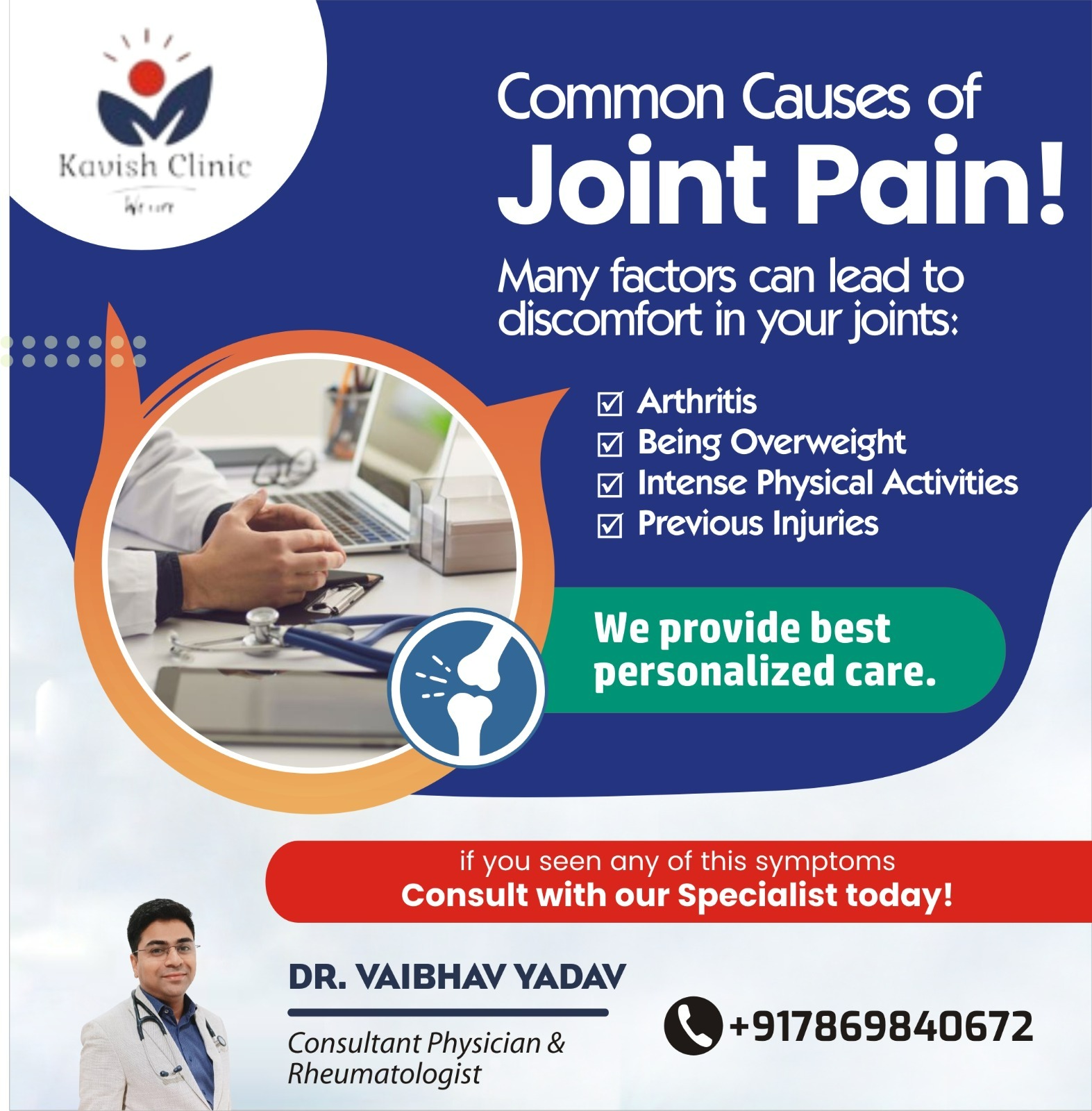
Common Causes of Joint Pain Treatment in Indore
Joint pain is a common health concern that can affect people of different age groups. Sometimes it starts as mild discomfort after physical activity, but in many cases, it may become frequent, painful, and limiting. Pain in the knees, shoulders, wrists, fingers, ankles, hips, back, or neck can disturb daily routine, reduce mobility, and affect quality of life. If you are searching for Common Causes of Joint Pain Treatment in Indore, it is important to understand the possible reasons behind joint pain and consult the right specialist on time.
Kavish Clinic offers consultation for joint pain, arthritis, swelling, stiffness, back pain, neck pain, gout, autoimmune conditions, and other rheumatology-related concerns. Under the guidance of Dr. Vaibhav Yadav, patients can receive proper evaluation and treatment guidance based on symptoms, medical history, and the actual cause of pain.
Why Joint Pain Should Not Be Ignored
Many people ignore joint pain in the beginning, thinking it is due to tiredness, age, or overwork. However, repeated or long-lasting pain may indicate inflammation, arthritis, injury, infection, or an autoimmune condition. Delaying consultation may allow the condition to worsen and affect joint movement.
You should seek medical advice if joint pain is associated with:
Timely evaluation helps identify the cause and supports better treatment planning.
Common Causes of Joint Pain
Understanding the cause of joint pain is the first step toward proper care. Different causes need different treatment approaches, so self-medication may not be the right solution.
1. Arthritis
Arthritis is one of the most common reasons for joint pain. It causes inflammation, stiffness, swelling, and reduced movement in one or more joints. Common types include rheumatoid arthritis, osteoarthritis, psoriatic arthritis, and inflammatory arthritis.
In many cases, arthritis pain is worse in the morning or after long periods of rest. A proper diagnosis is important to prevent joint damage and manage symptoms effectively.
2. Osteoarthritis
Osteoarthritis usually happens due to wear and tear of the joint cartilage. It commonly affects the knees, hips, spine, and hands. People may feel pain while walking, standing, climbing stairs, or using the affected joint.
Osteoarthritis is often seen in older adults, but it can also occur earlier due to obesity, injury, repetitive stress, or joint overuse.
3. Rheumatoid Arthritis
Rheumatoid arthritis is an autoimmune condition where the immune system attacks the joints. It often affects small joints of the hands, wrists, and feet. Symptoms may include pain, swelling, morning stiffness, fatigue, and joint tenderness.
Early diagnosis is important because untreated rheumatoid arthritis may cause long-term joint damage.
4. Gout
Gout is caused by increased uric acid levels in the body. It can cause sudden, severe joint pain, often in the big toe, ankle, knee, or foot. The affected joint may become red, swollen, warm, and extremely painful.
A rheumatologist can guide proper medicine, diet changes, and long-term uric acid control.
5. Injury or Overuse
Joint pain may occur after sports injury, fall, accident, heavy exercise, repetitive work, or sudden twisting movement. Ligament strain, muscle injury, tendon inflammation, or cartilage damage can cause pain and restricted movement.
If pain continues after injury, medical evaluation is necessary to avoid long-term problems.
6. Being Overweight
Excess body weight puts extra pressure on weight-bearing joints such as knees, hips, ankles, and lower back. Over time, this pressure may increase pain, stiffness, and wear and tear.
Weight management, exercise guidance, and medical care can help reduce joint stress.
7. Autoimmune Conditions
Some autoimmune diseases can affect joints and cause pain, swelling, stiffness, and fatigue. Conditions like lupus, ankylosing spondylitis, psoriatic arthritis, and inflammatory arthritis require proper rheumatology care.
These conditions may affect not only joints but also skin, eyes, spine, kidneys, or other body systems, depending on the disease.
8. Infection-Related Joint Pain
Sometimes infections can lead to joint pain or inflammation. Fever, redness, swelling, and severe pain should be taken seriously. Infection-related joint issues need urgent medical attention.
9. Vitamin Deficiency and Weakness
Vitamin D deficiency, calcium deficiency, poor nutrition, and general weakness may contribute to body aches, bone pain, and joint discomfort. Proper evaluation can help identify deficiency-related problems.
10. Lifestyle and Posture Problems
Long sitting hours, poor posture, lack of exercise, improper workstation setup, and reduced physical activity can cause pain in the neck, back, shoulders, and knees. Regular movement and posture correction may help in selected cases.
When to See a Rheumatologist for Joint Pain
A rheumatologist specializes in joint, muscle, bone, and autoimmune-related conditions. You should consult a rheumatologist in Indore if your joint pain is persistent, unexplained, or associated with swelling and stiffness.
A rheumatology consultation is helpful when:
For patients looking for Common Causes of Joint Pain Treatment in Indore, specialist evaluation helps identify the root cause instead of only reducing symptoms temporarily.
How Joint Pain Is Diagnosed
Diagnosis depends on the symptoms, affected joints, duration of pain, and physical examination. The doctor may ask about pain pattern, stiffness, swelling, fever, fatigue, lifestyle, injury history, and family history.
Evaluation may include:
Correct diagnosis is important because treatment for osteoarthritis, rheumatoid arthritis, gout, and injury-related pain is different.
Treatment Options for Joint Pain
Treatment depends on the cause and severity of the condition. The goal is to reduce pain, control inflammation, improve mobility, prevent damage, and support better daily function.
1. Medicines
Medicines may be advised to control pain, inflammation, uric acid, or autoimmune activity. Patients should avoid taking painkillers repeatedly without medical advice.
2. Lifestyle Changes
Healthy weight, proper sleep, balanced diet, regular movement, and avoiding smoking can support joint health.
3. Exercise and Physiotherapy
Joint-friendly exercises can improve flexibility, muscle strength, and movement. Physiotherapy may be recommended based on the condition.
4. Diet Guidance
Patients with gout, obesity, inflammation, or deficiency-related pain may need diet changes. A balanced diet helps support overall joint health.
5. Long-Term Disease Management
Autoimmune and inflammatory joint diseases need regular follow-up. Treatment may be adjusted depending on symptoms, reports, and disease activity.
6. Posture and Workstation Correction
For neck, back, and shoulder pain, posture correction and ergonomic changes can help reduce strain.
Why Early Treatment Matters
Early treatment can help prevent worsening of symptoms and reduce the risk of long-term joint damage. In conditions like rheumatoid arthritis and inflammatory arthritis, early diagnosis is especially important because delayed care can affect joint structure and function.
Timely treatment may help with:
Joint Pain Treatment in Indore: Local Care Advantage
People in Indore often search for joint pain treatment in Indore, arthritis doctor in Indore, or best rheumatologist in Indore when pain starts affecting daily activities. Local care makes consultation, follow-up, and long-term treatment easier.
Whether you live near Vijay Nagar, Palasia, Bengali Square, Nipania, Rau, Annapurna Road, Super Corridor, Kanadia Road, or nearby locations, timely consultation can help you manage symptoms better.
Consultation with Dr. Vaibhav Yadav
Every joint pain case is different. Some patients may have simple strain, while others may have arthritis, gout, autoimmune disease, or chronic inflammation. Dr. Vaibhav Yadav focuses on understanding the patient’s symptoms, identifying the cause, and guiding suitable treatment options.
The consultation may include detailed history, physical examination, report review, diagnosis-based treatment planning, lifestyle advice, and follow-up guidance for long-term care.
Why Choose Kavish Clinic for Joint Pain Care
Kavish Clinic provides rheumatology consultation for patients dealing with joint pain, arthritis, gout, back pain, neck pain, swelling, stiffness, and autoimmune-related concerns. The focus is on proper diagnosis, patient education, and personalized treatment planning.
If joint pain is affecting your daily comfort, mobility, or work routine, timely consultation can help you take the right step toward better joint health.
FAQs
1. What are the most common causes of joint pain?
Common causes include arthritis, osteoarthritis, rheumatoid arthritis, gout, injury, overuse, obesity, autoimmune diseases, infection, and vitamin deficiencies.
2. When should I consult a doctor for joint pain?
You should consult a doctor if joint pain lasts for weeks, causes swelling, morning stiffness, walking difficulty, fever, fatigue, or affects daily activities.
3. Can joint pain be treated without surgery?
Yes, many joint pain conditions can be managed with medicines, lifestyle changes, physiotherapy, weight control, and regular follow-up. Treatment depends on the cause.
4. Which specialist should I visit for arthritis and joint pain?
A rheumatologist is the right specialist for arthritis, inflammatory joint pain, gout, autoimmune conditions, and long-term joint stiffness.
Contact Us
If you are experiencing joint pain, swelling, stiffness, back pain, gout symptoms, or difficulty in movement, do not ignore the signs. Proper diagnosis and timely care can help protect your joints and improve your daily comfort.
Contact Us today to book your consultation and get expert guidance for joint pain treatment in Indore.
| Tags: | #Common Causes of Joint Pain Treatment in Indore |


