
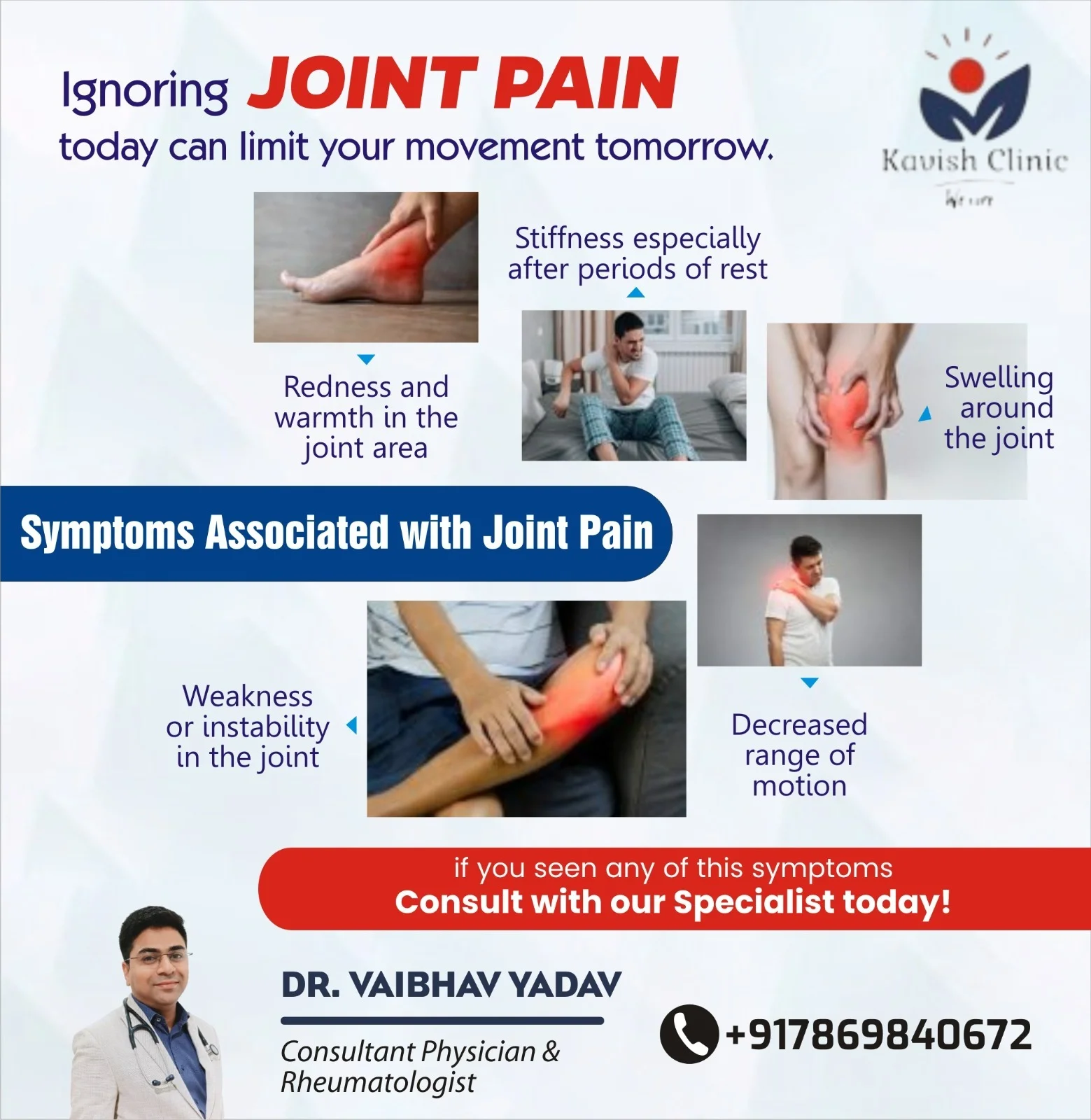
Joint pain can affect walking, climbing stairs, holding objects, exercising, working, and even sleeping comfortably. Although temporary soreness may occur after unusual physical activity, persistent pain—especially when accompanied by swelling, warmth, stiffness, or weakness—should not be ignored.
Professional joint pain treatment in Indore begins by identifying the underlying cause rather than simply suppressing discomfort. At Kavish Clinic, Dr. Vaibhav Yadav provides consultation for arthritis and other rheumatological conditions that may affect the joints, muscles, connective tissues, and overall mobility.
What Is Joint Pain?
A joint is the point where two or more bones meet. Cartilage, ligaments, tendons, muscles, and a lubricating fluid work together to support smooth movement. A problem affecting any of these structures may cause pain, stiffness, swelling, or instability.
Joint discomfort can involve a single joint or several joints simultaneously. Frequently affected areas include:
The pattern of symptoms often provides important diagnostic clues. Pain in one injured joint may require a different approach from symmetrical swelling in several small joints.
When Should Joint Pain Be Taken Seriously?
Joint pain deserves medical attention when it persists, repeatedly returns, interferes with everyday tasks, or appears with inflammation. Early evaluation can be particularly important for inflammatory arthritis because delayed treatment may allow ongoing damage.
Consult a joint pain specialist in Indore if you notice:
Sudden severe pain with marked swelling, fever, injury, inability to bear weight, chest discomfort, or breathing difficulty requires urgent medical evaluation.
Common Causes of Joint Pain
Joint pain is a symptom, not a single disease. Accurate diagnosis is essential because treatment varies considerably according to the cause.
Osteoarthritis
Osteoarthritis develops when joint cartilage and surrounding structures change over time. It commonly affects the knees, hips, hands, and spine.
Symptoms may include pain during movement, stiffness after rest, reduced flexibility, and a grating sensation. Although it is more common with increasing age, previous injury, excess body weight, repetitive stress, and genetic factors may also contribute.
Rheumatoid Arthritis
Rheumatoid arthritis is an autoimmune condition in which the immune system mistakenly attacks the joint lining. It often affects several joints and may cause prolonged morning stiffness, swelling, warmth, fatigue, and reduced function.
Timely rheumatoid arthritis treatment in Indore is important because uncontrolled inflammation can damage joints and affect other parts of the body.
Gout
Gout occurs when uric acid crystals accumulate in a joint, producing sudden and intense inflammation. The big toe is commonly affected, but gout can also involve the ankle, knee, wrist, or other joints.
A gout attack may cause severe pain, swelling, redness, warmth, and sensitivity. Diagnosis should not be based only on a raised uric acid report, as clinical evaluation is also necessary.
Psoriatic Arthritis
Some people with psoriasis develop joint inflammation, stiffness, swollen fingers or toes, heel pain, or nail changes. Joint symptoms can occasionally appear before obvious skin lesions.
Ankylosing Spondylitis
This inflammatory condition mainly affects the spine and sacroiliac joints. It may cause lower-back pain and stiffness that is worse after rest but improves with movement.
Young adults with prolonged morning stiffness or back pain that improves with activity should consider consultation with a rheumatologist in Indore.
Injury and Overuse
Ligament sprains, muscle strains, cartilage damage, repetitive movement, and sports injuries can lead to localised joint pain. The history of injury and examination findings help determine whether imaging or orthopaedic care is required.
Infections and Other Medical Conditions
Certain infections, autoimmune disorders, hormonal conditions, or metabolic problems may cause joint symptoms. This is why persistent pain should not be self-treated indefinitely without understanding its cause.
What Are the Warning Signs of Inflammatory Arthritis?
Mechanical joint pain and inflammatory joint pain can overlap, but some features may raise suspicion of an autoimmune or inflammatory condition.
Potential signs include:
These symptoms do not confirm a diagnosis by themselves. A rheumatology consultation in Indore is required to interpret them in context.
How Is the Cause of Joint Pain Diagnosed?
A careful medical history and physical examination form the foundation of diagnosis. The doctor may ask when the pain began, whether stiffness is worse in the morning, which joints are affected, and whether symptoms improve with rest or activity.
The assessment may include:
Blood tests, X-rays, ultrasound, MRI, or joint-fluid analysis may be recommended when clinically necessary. Not every patient requires every investigation.
No single blood test can diagnose all forms of arthritis. Results must be interpreted alongside symptoms and examination findings.
Treatment Options for Joint Pain
The appropriate treatment depends on the diagnosis, symptom severity, affected joints, age, medical history, and impact on daily life.
Medicines
Depending on the cause, a doctor may prescribe pain-relieving medicines, anti-inflammatory treatment, uric-acid management, or disease-modifying medication.
Autoimmune arthritis may require specialised medicines to control inflammation and protect joints. These treatments need medical supervision and periodic monitoring.
Patients should avoid prolonged self-use of painkillers because some medicines can affect the stomach, kidneys, liver, blood pressure, or heart.
Exercise and Physiotherapy
Appropriate movement can support flexibility, strength, and joint function. A physiotherapy programme may include:
Exercise should match the diagnosis and current stage of the condition. A severely inflamed or recently injured joint may need a modified routine.
Weight Management
Excess body weight can increase mechanical stress on weight-bearing joints such as the knees and hips. Gradual, medically appropriate weight management may improve mobility and complement other forms of arthritis treatment in Indore.
Heat and Cold Application
Warmth may feel soothing for stiffness, while a cold pack may help during selected episodes of swelling. The choice depends on the condition, and extreme temperatures should never be applied directly to the skin.
Lifestyle and Daily Routine
Small changes can protect painful joints and simplify everyday activities:
Why Early Rheumatology Care Matters
Some inflammatory diseases can continue damaging joints even when pain temporarily improves. Early specialist care can help establish a diagnosis and begin appropriate treatment before significant loss of function occurs.
Benefits of timely rheumatology care in Indore may include:
Treatment goals should be realistic and personalised. The aim may include controlling inflammation, improving function, preventing complications, and supporting long-term quality of life.
Mistakes to Avoid When Managing Joint Pain
Joint pain often leads people to rely on repeated painkillers, unverified supplements, or home remedies. These approaches may delay diagnosis and sometimes create additional health problems.
Avoid:
Complementary practices may support relaxation or comfort, but they should not replace evidence-based medical care for inflammatory disease.
Can Diet Cure Arthritis?
No single food can cure arthritis. However, a balanced eating pattern can support overall health and weight management.
A practical diet may include vegetables, fruits, appropriate protein sources, whole grains, nuts, seeds, and healthy fats according to individual needs. People with gout, diabetes, kidney disease, or other medical conditions may require more specific dietary guidance.
Supplements should be used only after discussing their necessity, safety, and possible interaction with existing medicines.
Joint Pain Care for Different Age Groups
Joint pain is not limited to older adults. Younger people can develop sports injuries, autoimmune arthritis, spinal inflammation, infections, or overuse-related conditions.
Older adults may experience osteoarthritis, reduced muscle strength, balance problems, or multiple medical issues that influence treatment choices. Therefore, personalised joint pain care in Indore should consider age, activity level, occupation, existing illnesses, and functional goals.
Frequently Asked Questions
Which doctor should I consult for persistent joint pain?
A rheumatologist evaluates autoimmune, inflammatory, and systemic causes of joint pain. An orthopaedic specialist may be appropriate for fractures, ligament injuries, advanced structural damage, or surgical concerns. Your initial evaluation can help determine the right pathway.
Is morning stiffness a sign of arthritis?
Morning stiffness can occur in several joint conditions. Prolonged stiffness, especially with swelling or involvement of multiple joints, may suggest inflammatory arthritis and should be evaluated.
Can arthritis be controlled without surgery?
Many forms of arthritis are managed with medicines, exercise, physiotherapy, weight management, and lifestyle adjustments. Surgery is considered only for selected structural problems or advanced joint damage.
Are all joint pains caused by high uric acid?
No. Joint pain can result from osteoarthritis, rheumatoid arthritis, injuries, infections, gout, or several other conditions. A raised uric acid level alone does not establish the cause.
Consult a Joint Pain in Indore
Do not allow recurring pain, swelling, or stiffness to quietly restrict your movement. A timely medical assessment can identify the cause and create a care plan suited to your condition.
Consult Dr. Vaibhav Yadav, Consultant Physician and Rheumatologist, at Kavish Clinic for professional joint pain treatment in Indore.Contact us today and take a confident step toward better joint health and easier movement.
| Tags: | #Joint Pain Treatment in Indore |


