
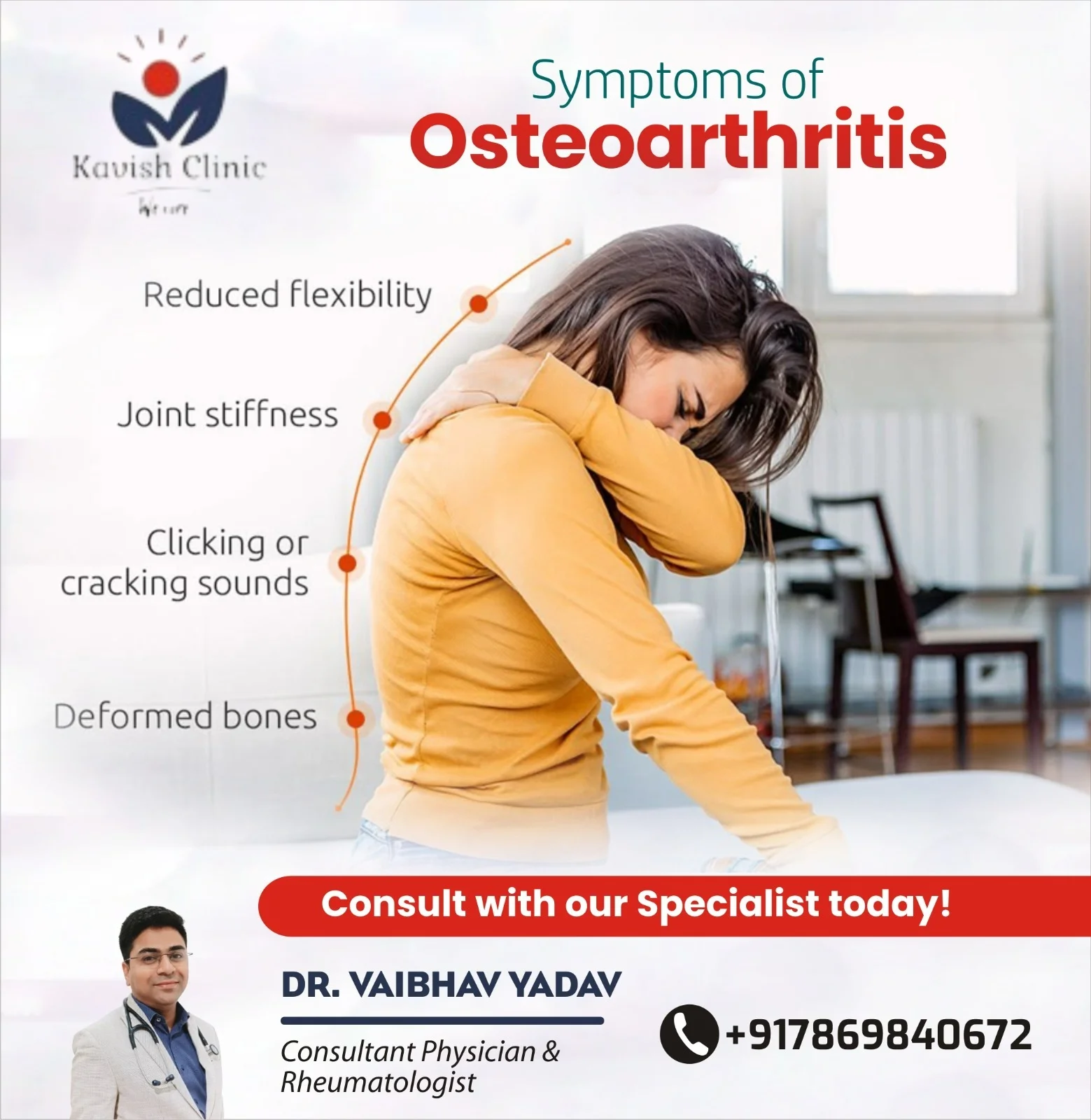
Joint problems often become noticeable through small changes: taking longer to straighten up after sitting, avoiding stairs, or finding it uncomfortable to open a jar. These difficulties may develop gradually, making it tempting to dismiss them as an unavoidable part of getting older.
Persistent pain and stiffness deserve attention. Osteoarthritis Treatment in Indore begins with understanding which joints are affected, confirming the cause, and developing a plan that supports everyday movement.
At Kavish Clinic, patients can enquire about consultation with Dr. Vaibhav Yadav, Consultant Physician and Rheumatologist. Whether your concern involves knee discomfort, restricted flexibility, or changes in hand function, an assessment can help clarify the next steps.
What Is Osteoarthritis?
Osteoarthritis is a condition affecting the whole joint, including cartilage, bone, and surrounding tissues. Cartilage changes are part of the process, but describing the condition only as “wear and tear” oversimplifies it.
The knees, hips, hands, neck, and lower back can be affected. Symptoms and their impact vary: one person may experience occasional discomfort, while another finds routine activities increasingly difficult.
Age increases the likelihood of osteoarthritis, but previous injuries, joint structure, genetics, and excess body weight can also influence risk. It is not exclusively a condition of older adults.
Symptoms That May Point Towards Osteoarthritis
Recognising osteoarthritis symptoms can help you explain your concerns during a consultation. No single symptom, however, confirms the diagnosis.
Joint Pain During Activity
Discomfort may become more noticeable when using the affected joint. Walking, gripping objects, or climbing stairs can reveal difficulties that are less apparent at rest.
Stiffness and Reduced Flexibility
A joint may feel stiff after inactivity. Morning stiffness associated with osteoarthritis is generally brief; prolonged stiffness can suggest another condition requiring assessment.
Swelling, Tenderness, and Joint Sounds
Some people notice tenderness, swelling, or a grating sensation during movement. Clicking or cracking by itself does not establish osteoarthritis and should be interpreted alongside the wider clinical picture.
Changes in Joint Shape
Bony enlargement or changes in alignment can develop in some affected joints. These changes are not present in everyone and should not be self-diagnosed from photographs.
Why a Rheumatology Assessment Can Be Useful
Joint pain is a symptom shared by several conditions. Osteoarthritis, rheumatoid arthritis, gout, and other joint disorders do not all require the same treatment.
When seeking a rheumatologist in Indore, explain the complete pattern rather than focusing only on the most painful moment. Useful details include which joints are involved, whether symptoms affect both sides, and how long stiffness lasts.
A consultation is also an opportunity to discuss questions such as:
The goal is to leave with a clear understanding of the assessment and a manageable plan.
How Is Osteoarthritis Diagnosed?
Diagnosis commonly begins with your symptom history and a physical examination. The clinician considers factors such as activity-related pain, stiffness, and joint movement.
X-rays and blood tests are not automatically necessary for every typical presentation. They may be used when the findings are unusual or another explanation needs investigation.
Bring existing reports if you have them, but do not arrange additional scans solely because you assume they are required. Ask what any recommended test is intended to clarify.
For a joint pain consultation in Indore, a short written account of your symptoms can be more useful than trying to remember every detail during the appointment.
What Can Osteoarthritis Treatment Include?
Treatment aims to reduce symptoms and improve function. The approach depends on your affected joints, general health, preferences, and the difficulties you face.
Exercise and Physiotherapy
Appropriate exercise is a central part of osteoarthritis management. A programme may combine muscle strengthening with activity that supports general fitness. A clinician or physiotherapist can help adapt it to your abilities.
Weight Management When Relevant
For people living with overweight or obesity, weight reduction may reduce strain on weight-bearing joints. Support should be practical and individualised.
Medicines and Other Options
Topical or oral medicines may be considered after reviewing their benefits and risks. Selected patients may be offered joint injections. Surgery can be considered when other approaches have not provided sufficient relief and symptoms substantially affect daily life.
Make Everyday Goals Part of the Plan
“Less pain” is an understandable aim, but a more specific goal helps make progress easier to discuss.
For someone seeking knee osteoarthritis treatment in Indore, the priority might be walking to a nearby shop. Another person may want to manage stairs at home or sit comfortably through a working day.
Consider identifying two or three activities that matter most:
Tell your doctor which task is most important and what currently prevents it. This gives the consultation a practical focus beyond a pain score.
Keep Follow-Up Conversations Specific
Between appointments, brief notes can help you describe your experience accurately. Record meaningful changes rather than monitoring every minor sensation.
You might note whether a previously difficult task has become easier, whether symptoms interrupt sleep, or whether a medicine causes an unwanted effect.
If a recommendation is difficult to follow because of cost, work hours, transport, or family responsibilities, explain the obstacle. The appointment is an opportunity to discuss workable options.
Before leaving a review, confirm:
When Joint Pain Needs Urgent Attention
A suddenly very painful, swollen joint—particularly with fever, chills, or feeling generally unwell—requires urgent medical assessment. A joint infection can develop quickly and needs prompt treatment.
Do not assume this is a routine osteoarthritis flare or wait for a scheduled appointment.
Preparing for Your Appointment in Indore
When booking an arthritis consultation in Indore, keep previous prescriptions, relevant reports, and a current medicine list available.
Also mention earlier injuries or operations involving the affected joint. If a family member helps with daily activities, you may wish to bring them to help explain the difficulties you experience.
Dr. Vaibhav Yadav’s listed contact number is +91 7869840672. Confirm the current clinic address, consultation hours, and appointment availability when calling.
Frequently Asked Questions
1. Does osteoarthritis always become progressively worse?
No. Symptoms vary, and the condition does not inevitably worsen. Treatment and supportive measures can help people manage discomfort and maintain function.
2. Should I avoid exercise because my joints hurt?
Complete avoidance is not generally the aim of osteoarthritis care. Appropriate exercise is an important treatment, but the programme should suit your condition and abilities. Ask for guidance on progression and symptom response.
3. Does every person with osteoarthritis need surgery?
No. Many people use nonsurgical approaches. Surgical assessment may be appropriate when symptoms remain significantly limiting despite suitable treatment.
4. What should I discuss during my first consultation?
Explain your symptoms, previous treatment, and the activities you want to regain. Ask about the likely diagnosis, treatment choices, follow-up arrangements, and signs that require earlier medical attention.
Take a Step Towards More Comfortable Movement
Joint symptoms do not have to remain an unanswered concern. Understanding their cause and agreeing on realistic goals can help you approach everyday activities with greater clarity.
Contact Kavish Clinic to enquire about Osteoarthritis Treatment in Indore with Dr. Vaibhav Yadav.
Contact Us Today to Book Your Joint Health Consultation.
| Tags: | #Osteoarthritis Treatment in Indore |


