
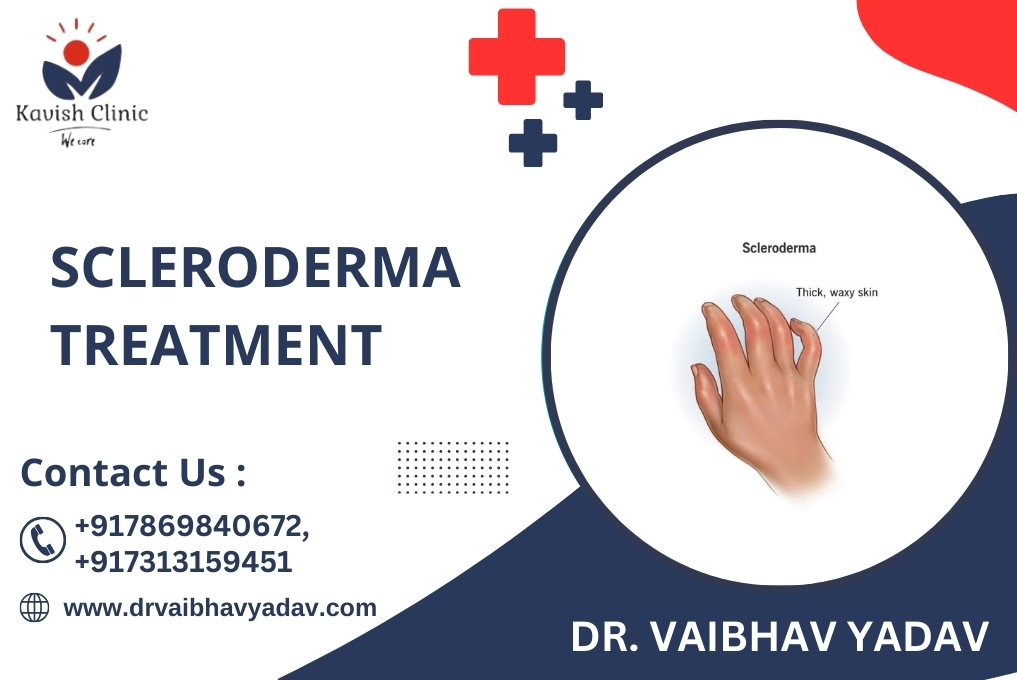
Tightening skin, swollen fingers, or fingers that change colour in the cold can raise questions that are difficult to answer on your own. When symptoms affect several parts of the body, a clear explanation of the diagnosis and next steps becomes especially valuable.
Scleroderma Treatment in Indore begins with understanding the form of the condition, the symptoms present, and whether any internal organs need assessment. Care is planned around those findings rather than a standard treatment schedule for everyone.
Patients can consult Dr. Vaibhav Yadav at Kavish Clinic for a rheumatology assessment and discussion of appropriate management.
What Is Scleroderma?
Scleroderma describes a group of autoimmune conditions associated with changes in connective tissue. Inflammation and excessive collagen production can lead to thickening and hardening of the skin. Depending on the form, blood vessels and internal organs may also be affected.
The pattern and severity vary. Understanding the diagnosis helps you and your clinician choose treatment, monitoring, and practical support suited to your circumstances.
Understanding the Main Forms
Localised scleroderma
Localised scleroderma, including morphoea, mainly affects the skin and sometimes tissues beneath it, such as muscle or bone. The location and depth of involvement matter, particularly when movement or growth could be affected.
Systemic sclerosis
Systemic sclerosis can affect circulation and internal organs as well as the skin. Doctors may describe it as limited cutaneous or diffuse cutaneous disease, referring to the distribution of skin involvement.
Both forms of systemic sclerosis need appropriate assessment. The extent of visible skin change alone does not provide a complete picture of someone’s health.
Symptoms Worth Discussing With a Specialist
Symptoms that may prompt an assessment include:
Colour changes in the fingers may be Raynaud’s phenomenon, which can occur for different reasons. These symptoms do not establish a diagnosis by themselves. Explain when each change began and how it affects daily activities.
How Is Scleroderma Diagnosed?
There is no single blood test that confirms every case. A rheumatology consultation in Indore may include reviewing symptoms, medical and family history, medicines, and previous investigations, followed by a physical examination.
Blood tests for autoantibodies can provide useful clues, but results must be interpreted alongside the clinical findings. A positive antibody result alone does not confirm scleroderma. A skin biopsy may help in selected situations.
For suspected or established systemic sclerosis, assessment may also involve kidney tests, urine tests, blood-pressure measurements, breathing tests, an echocardiogram, or chest imaging. Your clinician can explain which investigations are relevant and what each is intended to clarify.
What Can Treatment Aim to Achieve?
The goals of scleroderma management include controlling symptoms, preserving function, and detecting and treating complications. The plan depends on disease type, activity, and the tissues or organs involved.
Managing skin and movement difficulties
Skin care may help with dryness, itching, and discomfort. Selected medicines may be considered when inflammation or progressive skin involvement needs treatment.
Physiotherapy and occupational therapy can support joint movement, hand function, and everyday tasks. Exercises should be taught and adapted to your abilities, particularly if skin tightness or joint problems limit movement.
Supporting circulation
Keeping warm can help reduce cold-triggered Raynaud’s episodes. Some people also need prescribed medicines to improve blood flow. Fingertip sores require review so the clinician can assess circulation, healing, and any other concerns.
Addressing digestive symptoms
Heartburn or swallowing problems should be described clearly. Depending on the findings, treatment may include medicines, changes to meal timing, or further assessment. Ask for individual advice if eating becomes difficult or your weight changes unexpectedly.
Treating organ involvement
Lung, heart, or kidney involvement may require specific medicines and coordination with other specialists. Immune-targeting treatment or medicines directed at particular complications may be considered for selected patients.
The clinician should explain the intended benefit, possible adverse effects, monitoring requirements, and review plan. Corticosteroids require particular caution in systemic sclerosis because they can increase the risk of renal crisis. Discuss prescribed treatment with your doctor and do not change or stop it independently.
Practical Care Between Appointments
Day-to-day measures can support the medical plan:
For reflux, discuss whether smaller meals and avoiding meals close to bedtime would help. Share difficulties with food intake so advice can account for nutrition and swallowing concerns.
Why Follow-Up Matters Even When You Feel Well
Some complications of systemic sclerosis can develop before obvious symptoms appear. Follow-up helps assess changes and review the effect and safety of treatment.
Ask which checks you need, how often they should be repeated, and whether home blood-pressure monitoring is appropriate. Keep a record of readings if advised and learn which changes should be reported promptly.
Bring up fatigue, hand function, work difficulties, and emotional wellbeing as well. Care can include practical adaptations and support for the impact the condition has on everyday life.
When to Seek Urgent Medical Attention
In someone with systemic sclerosis, a sudden rise in blood pressure, a severe new headache, blurred vision, or markedly reduced urine output needs urgent assessment. These can indicate kidney or blood-pressure complications.
Sudden breathlessness, chest pain, or severe deterioration also warrants immediate medical attention. Seek urgent care rather than waiting for a routine appointment. Ask your treating team for a clear plan about whom to contact if concerning symptoms develop.
Planning a Consultation in Indore
For a visit in Vijay Nagar, Indore, confirm the clinic address, appointment time, and current consultation fees before travelling. Carry previous prescriptions, antibody reports, scans, breathing-test results, and any blood-pressure records.
Prepare a short symptom timeline and note your main questions. For systemic sclerosis care in Indore, it can help to ask which form is suspected, what further assessment is needed, and how follow-up will be coordinated. Understanding these steps makes the plan easier to follow.
Frequently Asked Questions
1. Can scleroderma be completely cured?
There is currently no cure for scleroderma. However, treatments can help manage symptoms, preserve function, and address complications. The course varies between individuals, so discuss realistic goals and monitoring with the clinician who knows your condition.
2. Is localised scleroderma the same as limited systemic sclerosis?
No. Localised scleroderma mainly involves skin and sometimes underlying tissues. Limited cutaneous systemic sclerosis is a form of systemic disease and can involve circulation and internal organs. Ask your clinician to clarify the exact diagnosis being used.
3. Does a positive ANA test confirm the diagnosis?
No. Antinuclear antibodies can occur in several conditions, and a positive result needs clinical interpretation. Diagnosis depends on symptoms, examination, and other relevant findings. Take the complete report to your appointment rather than relying on a result in isolation.
4. Do I need follow-up if my skin symptoms seem stable?
People with systemic sclerosis may still need monitoring because internal changes can occur with few noticeable symptoms. Your clinician will recommend a schedule based on your disease and treatment. Ask which tests and checks are relevant to you.
5. Can physiotherapy help with hand stiffness?
Physiotherapy and occupational therapy may help maintain movement and support hand function. Exercises and adaptations should suit the areas affected and your abilities. Ask for a demonstration and report pain, sores, or difficulties that require changes to the programme.
Contact Us for Scleroderma Care in Indore
Take the next step towards understanding your symptoms and the care they may require. Contact Dr. Vaibhav Yadav at Kavish Clinic to discuss assessment, treatment options, and a follow-up plan suited to your condition.
Contact Us today to book your consultation in Indore and receive guidance on the next steps in your care.
Rheumatologist in Indore | Doctor for Psoriatic arthritis Treatment in Indore | Doctor for Hypertension Treatment in Indore | Rheumatology Services In Indore | Rheumatologist For Rheumatoid Arthritis Treatment In Indore | Rheumatologist For Low Backache Treatment In Indore | Rheumatologist For Ankylosing spondylitis Treatment in Indore | Rheumatologist For SLE Treatment In Indore | Rheumatologist For Lupus Nephritis Treatment In Indore | Rheumatologist For Scleroderma Treatment In Indore | Rheumatologist For Psoriatic arthritis Treatment In Indore | Doctor For Fibromyalgia Treatment In Indore | Osteoarthritis Treatment In Indore | Osteoporosis Treatment in Indore | Juvenlice Inflammatory Arthritis Treatment In Indore | Sjogren syndrome Near Me In Indore | Inflammatory myositis Treatment In Indore | Bechets Disease Treatment In Indore | Diabetologist in Indore | Diabetes Treatment Services in Indore | Doctor For Type I Diabetes Treatment In Indore | Doctor For Type II Diabetes Treatment In Indore | Pancreatic Diabetes Treatment In Indore | Pregnancy Inducted Diabetes Treatment In Indore | Doctor For Hypertension Treatment In Indore | Primary Hypertension In Indore | Secondary Hypertension Doctor in Indore | Thyroid Disorders Treatment In Indore | Hypothyroidsm Near Me In Indore | Hyperthyroidism Near Me In Indore | Thyroid in Indore
| Tags: | #Scleroderma Treatment in Indore |


